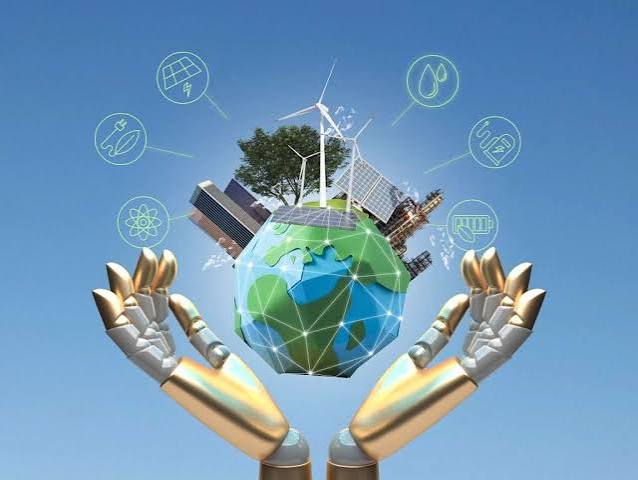
Two golden robotic hands cradle a green globe topped with wind turbines, solar panels, a tree and city towers. Icons float around it: a solar cell, a plug with a leaf, an atom, a water drop, a battery. The picture is a compact version of one of the biggest questions of our time: how do we power a growing world without damaging it?
What the image shows
The globe in the image is drawn in a low-poly style, with a network of glowing lines across its surface. Standing on it are wind turbines, a solar array, a large tree, modern office buildings and an industrial site with chimneys. Around the globe, six circular icons suggest the main tools of the energy transition: solar power, clean electricity, nuclear energy, water, storage and cleaner transport or fuels. The robotic hands underneath hint at a role for advanced technology in looking after it all.
The energy challenge in brief
The world needs more energy every year. Population growth, rising incomes, air conditioning, electric vehicles and the data centers behind artificial intelligence are all pushing demand upward. At the same time, burning coal, oil and gas remains a major source of greenhouse gas emissions, which scientists link to rising temperatures, more extreme weather and sea-level rise.
Balancing these pressures is the central task of energy policy: keep power affordable and reliable while cutting emissions.
The main tools, as pictured
- Solar power: Panel costs have fallen sharply over the past decade, making solar one of the cheapest sources of new electricity in many regions.
- Wind power: Onshore and offshore turbines are now a major part of the power mix in several countries.
- Hydropower and water: Dams and pumped storage supply large amounts of low-carbon electricity, though they can affect rivers, ecosystems and communities.
- Nuclear energy: Provides steady, low-carbon power around the clock, but raises questions about cost, construction time, waste and safety that remain debated.
- Batteries and storage: Help store surplus solar and wind power for use when the sun sets or the wind drops.
- Clean transport and fuels: Electric vehicles, charging networks and alternatives such as hydrogen aim to reduce emissions from transport and heavy industry.
Where technology comes in
The robotic hands in the picture are a reminder that digital tools are becoming central to energy systems. Smart grids use sensors and software to balance supply and demand. Forecasting models predict wind and solar output. Artificial intelligence helps detect faults, plan maintenance and manage building energy use. Better materials and manufacturing are lowering the cost and boosting the efficiency of panels, turbines and batteries.
There is a twist, however. The same technologies drive new electricity demand, particularly from data centers, so digital growth and clean power planning increasingly need to be considered together.
The obstacles
The path is not simple, and several challenges stand out:
- Reliability: Solar and wind output varies, so grids need storage, backup capacity and stronger transmission lines.
- Cost and finance: Many developing countries need affordable investment to build clean infrastructure.
- Supply chains: Batteries, panels and turbines depend on minerals and manufacturing concentrated in a few places.
- Land and communities: Large projects can raise concerns about land use, wildlife and local consent.
- Existing systems: Coal, oil and gas support jobs and revenue in many regions, so transitions must manage economic impact.
Why it matters for South Asia
For Bangladesh and its neighbors, energy choices are closely tied to both development and climate risk. The region is highly exposed to flooding, cyclones and heat, and it also needs reliable electricity for industry and households. Solar rooftops, regional power trade and grid upgrades are among the options under discussion, along with the challenge of financing them.
What individuals and businesses can do
- Improve energy efficiency, from lighting and appliances to building insulation.
- Where feasible, consider rooftop solar or renewable power plans.
- Reduce waste and choose longer-lasting products.
- Ask suppliers and employers about their energy and emissions plans.
- Stay informed, since energy policy and prices affect household budgets directly.
The takeaway
The image offers an optimistic view: a world held carefully in capable hands, with clean power, green space and cities coexisting. Reality is more complicated, with trade-offs in cost, reliability and fairness. But the tools shown in the picture are real and improving, and the choices made about them in the next few years will shape the energy system for decades.
Copyright & Disclaimer
© 2026 Frontara News. All rights reserved. This article is original content written for frontaranews.com. No part may be reproduced, copied or redistributed without prior written permission, except for brief quotations with proper credit and a link back to the original article.